


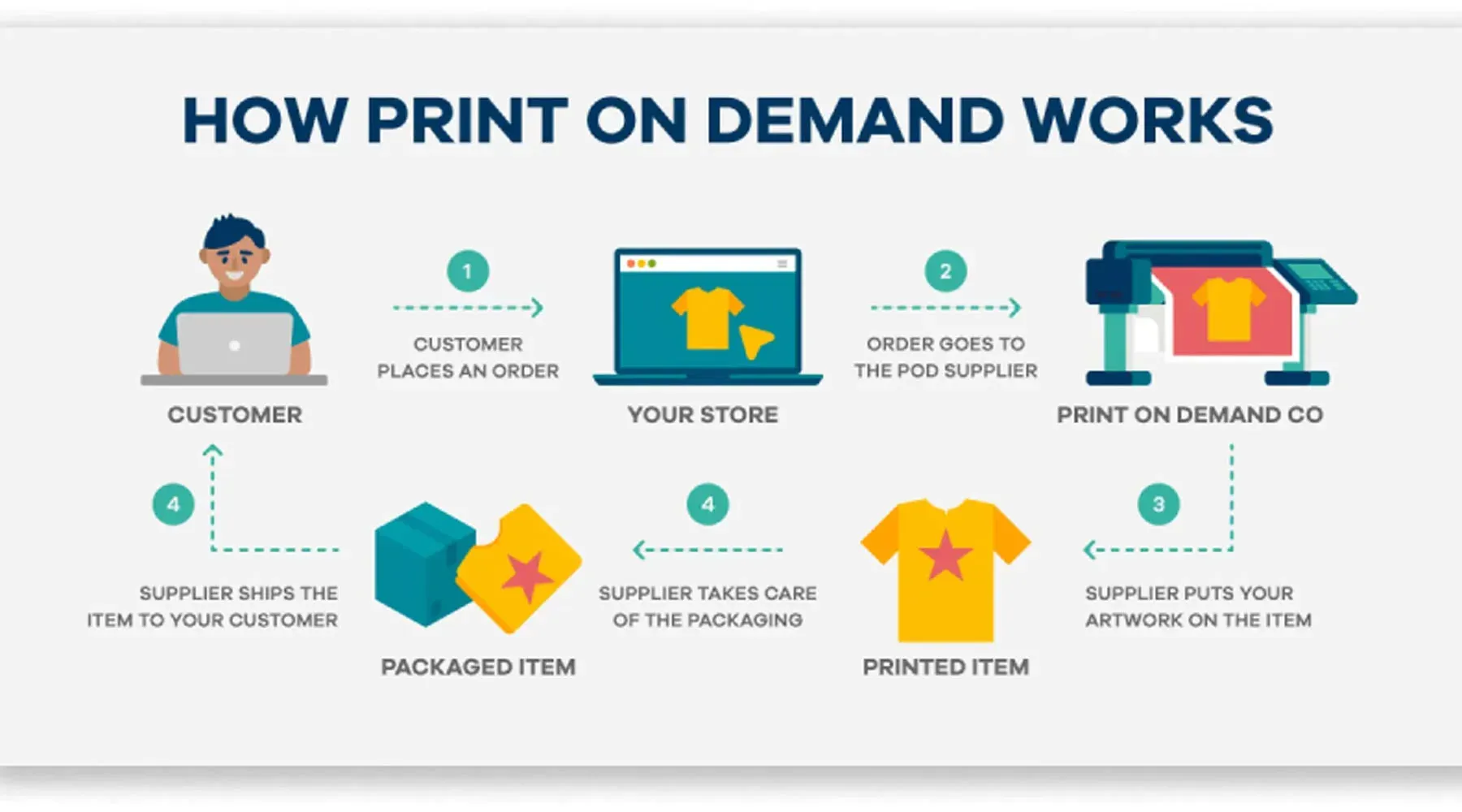
The Print on Demand workflow is a precisely choreographed journey that transforms a spark of inspiration into a market-ready product, a fusion of creativity and logistics that builds confidence from concept through customer delivery. For many creators, this model promises low upfront costs and rapid iteration, aligning with the broader print on demand process while highlighting the practical steps in the POD workflow steps. Our guide highlights how a clear from idea to product POD mindset, with validation, design, supplier management, production, and marketing, can minimize risk, accelerate time-to-market, and maximize customer satisfaction. By outlining practical stages—from validating concepts to designing for production and selecting reliable POD supplier management partners—you’ll build a scalable product line that adapts to apparel, accessories, home decor, or novelty items. Whether you’re testing a single item or expanding to a catalog, this descriptive overview provides actionable steps you can apply right away to optimize quality, cost, and speed while building a sustainable, scalable brand.
Beyond the core concept, you can describe the path as an on-demand printing and fulfillment journey that converts ideas into tangible goods through a streamlined production pipeline. This reframing emphasizes related concepts such as the print on demand process, POD supplier collaboration, and from idea to product POD as signals to search engines about the broader topic. LSI-friendly terms like digital fabrication, design-to-product cycle, supplier networks, and order-fulfillment automation help readers connect to related sections on product development and logistics. By framing the topic with alternative terminology, you reinforce semantic richness and capture a wider range of queries related to POD workflow considerations.
From Idea to Product POD: Mastering the Print on Demand workflow and the Print on Demand Process
Launching a product through print on demand starts with clarity on goals and market fit. By anchoring your idea to a well-defined print on demand process, you reduce surprises and establish realistic timelines for validation, design, and supplier readiness. This upfront alignment helps you translate inspiration into a concrete plan that can scale, aligning with the From idea to product POD mindset.
This journey mirrors the broader POD workflow steps, turning a concept into a repeatable system. With a structured approach to validation, design decisions, supplier management, production, and marketing, you minimize risk and accelerate time-to-market while keeping customer value at the center.
POD Workflow Steps: A Practical Roadmap from Validation to Launch
POD workflow steps provide a practical roadmap from concept to launch. Begin with validation to confirm audience interest, price sensitivity, and feasibility with potential partners. Map each step to measurable criteria so you can decide when a concept is ready to prototype and sample, keeping the process tightly aligned with your business goals.
By documenting the process, you create a repeatable cycle you can apply across products. The steps—from idea validation and design briefs through supplier coordination and testing—are designed to reduce revisions, tighten lead times, and improve quality across your catalog, aligning with the From idea to product POD framework.
Print on Demand Product Development: Designing for Quality and Scale
Print on Demand Product Development centers on turning design intent into production-ready assets. This phase emphasizes design briefs, print method suitability (DTG, dye-sublimation, embroidery), and scalability so that a single design translates cleanly across multiple items. Thoughtful development minimizes post-launch surprises and quality issues, ensuring your product development aligns with customer expectations.
Careful product development also integrates supplier capabilities early, so the artwork, colorways, and sizing choices align with manufacturing realities. When you optimize for manufacturability, you shorten cycles from concept to customer and improve consistency across a growing product line, a core principle of print on demand product development.
POD Supplier Management: Selecting, Collaborating, and Maintaining Quality Partners
POD Supplier Management starts with selecting partners that match your quality standards and fulfillment needs. Request samples to verify color fidelity, material feel, and durability, and compare networks for global reach and transit times. Clear cost structures, returns policies, and automation options should be documented before committing to a supplier relationship.
Ongoing supplier collaboration is essential for quality control and speed. Establish a revision workflow for updates, monitor performance metrics, and maintain open communication to address issues quickly. A strong supplier management approach reduces risk and helps your From Idea to Product POD journey stay on track.
From Idea to Launch: Optimizing Sampling, Production, and Fulfillment for Repeatable Success
Optimizing sampling, production, and fulfillment is critical to turning a concept into a reliable customer experience. Use representative samples to validate print quality, material performance, and packaging—then refine based on real-world feedback and unboxing impressions. This stage is a practical guardrail against expensive launches.
Efficient production and fulfillment rely on standardized workflows, QC checkpoints, and transparent tracking. By tying lead times to marketing calendars and customer expectations, you can sustain growth while preserving margins. Continuous improvement—driven by data and feedback—ensures your ideas scale into repeatable success across a growing catalog.
Frequently Asked Questions
What is the role of validation in the print on demand workflow, and how does it align with the print on demand process from idea to product POD?
Validation is the first stage in the print on demand workflow and aligns with the broader print on demand process. It defines audience, price, and value, and tests feasibility with potential POD partners to inform the from idea to product POD path. Use market research, your USP, and rough unit economics to shape a viable print on demand product development plan.
In the POD workflow steps, how do you translate an idea into design while respecting print on demand product development constraints?
Translating idea to design in the POD workflow steps means turning concept into artwork that can be reliably reproduced. Create clear design briefs, plan for scalability and cross-product consistency, and account for platform and print limitations, delivering print-ready files. This step is core to print on demand product development and keeps you aligned with the print on demand process.
How should you approach POD supplier management during the from idea to product journey to ensure reliable print quality and fulfillment?
POD supplier management is a pillar of the workflow. Evaluate print quality through samples, compare fulfillment networks, check integrations, and clarify costs and policies. Establish a smooth revision process for updates and SKUs. Strong supplier management supports reliable from idea to product POD execution and quality control within the print on demand process.
Why is sampling and quality control critical in the print on demand process, and how do you implement it within the production and fulfillment phase of the POD workflow?
Sampling is the primary risk-control checkpoint in the print on demand process. Order representative samples, evaluate print quality, color fidelity, durability, and packaging; gather stakeholder feedback; and iterate quickly. Effective sampling reduces post-launch issues and strengthens the overall print on demand workflow and product development.
What listing and marketing strategies optimize visibility and conversions in a repeatable print on demand workflow, and how do they tie into print on demand product development?
Listing and marketing complete the cycle in the print on demand workflow. Write detailed, keyword-rich descriptions, create high-quality visuals, and craft SEO-friendly titles. Set pricing, run promotions, and use customer feedback to refine future designs, tying back to print on demand product development and the from idea to product POD journey.
| Step | Focus | Key Points |
|---|---|---|
| 1. Validate the idea and define product goals | Rigorous validation: audience, price, value proposition |
|
| 2. Idea to design: translate concept into visuals | Design clarity and production readiness |
|
| 3. Select POD partners and manage supplier relationships | Supplier capability and value alignment |
|
| 4. Sample, review, and optimize the product | Risk-control through representative sampling |
|
| 5. Production, quality control, and fulfillment | Consistent, scalable output and customer trust |
|
| 6. Listing, marketing, and post-launch optimization | Visibility, conversions, and sustainable messaging |
|
| 7. Continuous improvement and scale | Data-driven growth and resilience |
|
| 8. Practical tips for a smoother POD workflow | Operational efficiency and quality emphasis |
|
Summary
Table summarizes the key points of a practical Print on Demand workflow, outlining validation, design translation, supplier management, sampling, production and fulfillment, listing and marketing, continuous improvement, and practical tips to smooth the process.