


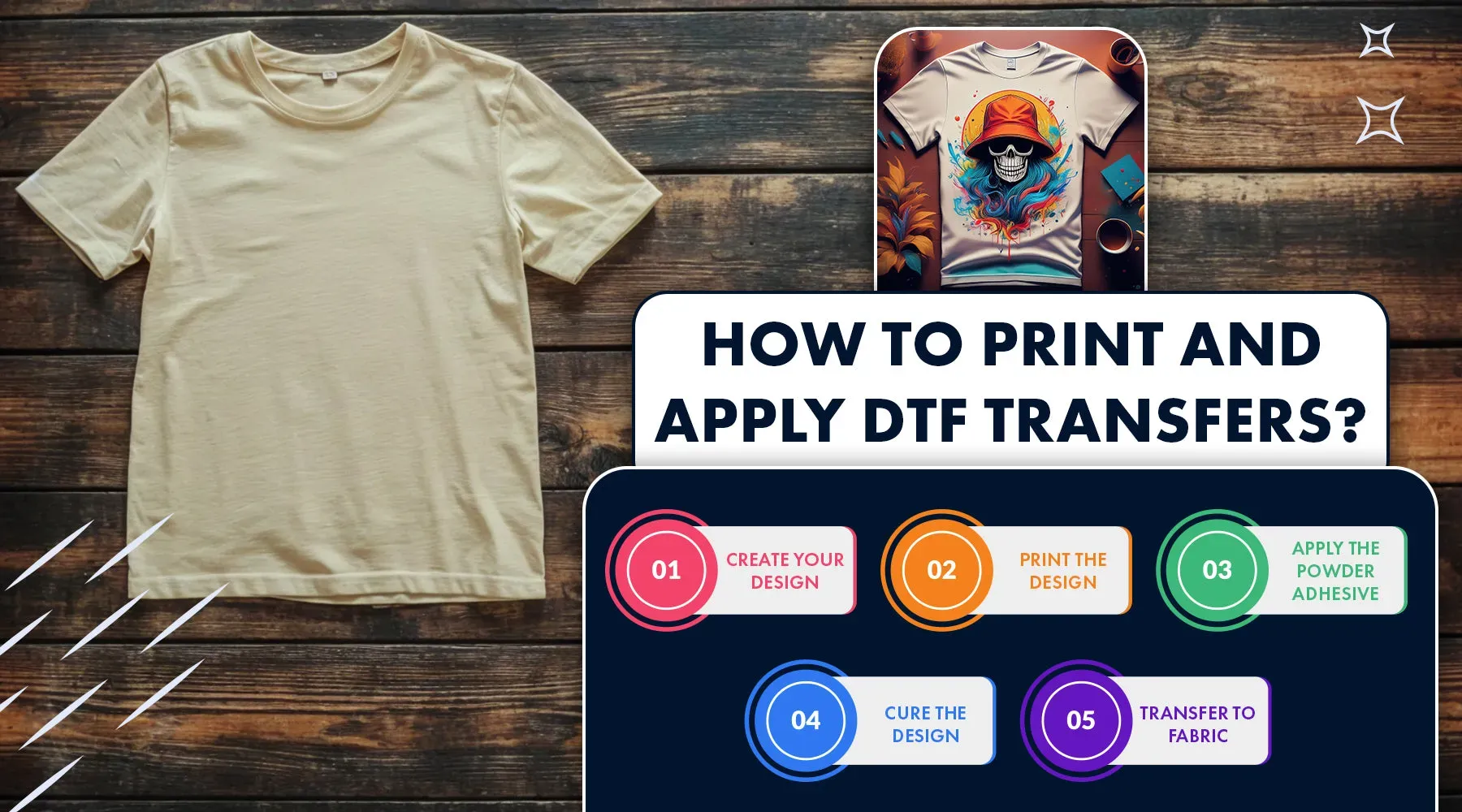
How to Apply DTF Transfers is a practical guide for crafters and apparel brands who want bold, durable prints on fabric, offering a clear path from design preparation to a finished garment, including how to choose the right media, what to expect from adhesion, and how to troubleshoot common issues before production begins. Mastering the right heat press temperature and pressing time is the baseline for consistent results, because even small deviations—such as a few seconds too long or a slightly higher temp—can dull color, compromise adhesion, cause gloss shifts, or alter the hand feel of the fabric in ways that are hard to correct after transfer, and documentation for future optimization. As you work through it, note DTF transfer tips, the heat press temperature for DTF, and DTF transfer time as core considerations that shape every choice from fabric type and ink formulation to transfer film and adhesive specifications, ensuring compatibility across styles from sportswear to fashion prints. In addition to temperature and time, this overview emphasizes prepress routines, proper alignment, protective coverings such as silicone sheets, and controlled post-press cooling to minimize misprints and edge lifting, while following DTF printing best practices to guide decisions across different projects, and build a reusable playbook for production. By following the core steps outlined here, you’ll boost color payoff, durability, and workflow efficiency, building a solid foundation for reliable, scalable DTF decoration and giving you confidence to expand into more complex designs and larger production runs, while documenting settings and results for future iterations.
Seen through another lens, applying a DTF design resembles moving a digitally printed film layer onto fabric via heat and pressure. This technique is also described as film-transfer decoration, digital-to-film transfers, or adhesive-backed prints, and all aim for durable color that remains flexible on garment fibers. LSI-friendly terms to weave in include transfer film, adhesive powder, prepress prep, curing, and post-press finishing, which signal the broader context without repeating the exact product name. Using these alternative terms helps search engines connect related ideas such as heat-press settings, fabric compatibility, color fidelity, and wash resilience. In practical terms, the steps—prepare the fabric, position the film, apply heat, and allow a controlled cooldown—remain the same, whether you’re thinking in terms of DTF, film-to-fabric transfers, or garment decoration via transfer sheets.
1. Optimizing Heat Press Temperature for DTF Transfers
Heat press temperature is a critical lever in DTF transfers. Choosing the right temperature depends on fabric type and transfer design. For general fiber blends, starting around 305–320°F (150–160°C) for 12–15 seconds helps balance strong bonding with fabric flexibility. Heavier fabrics like cotton twill or denim may require 320–335°F (160–170°C) for 12–20 seconds to improve adhesion, but you must monitor for scorching or gloss. This approach aligns with common DTF transfer tips and reflects solid DTF printing best practices that emphasize testing on a swatch before committing to a full run.
Because even small temperature shifts can alter color fidelity and texture, conduct a quick heat-press test on a sample fabric to confirm adhesion and post-press feel. Use a silicone sheet or teflon sheet to protect the surface and a flat, stable platen to ensure even heat distribution. Document the exact heat setting and duration used so you can reproduce reliable results batch after batch, reinforcing a repeatable process for how to apply DTF transfers.
2. Timing and Pressure: Mastering DTF Transfer Time for Durable Results
Press time directly influences how well the adhesive bonds the film to the fabric. Start with the manufacturer’s recommended window, typically 12–15 seconds, and adjust in small increments of 2–3 seconds based on fabric weight and the transfer’s adhesive properties. Apply a consistent medium to firm downward pressure; if your press lacks a gauge, mimic the feel of steady, deliberate pressure to ensure uniform contact and avoid incomplete adhesion or surface shine.
A disciplined routine that includes prepress, a clearly defined pressing interval, and a controlled post-press cooling step helps achieve consistent color payoff and edge integrity. Tracking exact timings and results across fabrics is a core part of DTF printing best practices, enabling you to optimize transfer time for each material while maintaining production efficiency.
3. Prepress, Alignment, and Setup: Laying the Foundation for Flawless DTF Transfers
Prepress is the unsung foundation of crisp, durable transfers. Moisture and wrinkles are the enemy of sharp details, so prepress the fabric for 3–5 seconds to remove moisture and flatten the surface. Use a clean, flat workspace and a pressing pillow for fabrics with seams or curves, ensuring the transfer is precisely aligned before heat is applied. This setup is a practical embodiment of how to apply DTF transfers, setting the stage for clean registration and strong adhesion.
Protect the transfer surface with a silicone or teflon sheet to promote even heat distribution and prevent direct heat contact that could cause scorching. A methodical prepress and alignment routine reduces misregistration and post-press misalignment, supporting DTF printing best practices and helping you consistently achieve high-quality results.
4. Troubleshooting Common DTF Transfer Issues with Temperature and Time Adjustments
When colors appear faded or dull, verify that the temperature and time fit the fabric and transfer type, then adjust in small steps and run another test. Cracking or peeling often signals over-pressing or excessive dwell time; in such cases, back off the time slightly or reduce temperature to restore flexibility without sacrificing adhesion. By applying these adjustments in line with DTF transfer tips, you can pinpoint the issue quickly and minimize waste.
Sticky residue after peeling can indicate insufficient cooling or an incorrect peel method, while ghosting or misalignment points to transfer shifts during press. Recheck alignment, use more secure masking or repositionable adhesive, and reinforce your procedures with DTF printing best practices to keep results consistent across batches.
5. How to Apply DTF Transfers: A Step-by-Step Routine for Consistency
Prepare the fabric and transfer, ensuring the textile is clean and dry. Align the transfer on the garment and use light tack or low-adhesion tape to hold it in place. Preheat and press the garment briefly to remove moisture, then apply the transfer with calibrated pressure, covering it with a silicone sheet and pressing at the chosen temperature and time according to your guidelines. This mirrors the core steps of how to apply DTF transfers and builds a predictable workflow.
After the timer ends, allow a brief post-press cooldown if the peel timing requires it. Do not rush the peel; a proper cooldown can improve color payoff and reduce edge lifting. Peel according to your film’s hot, warm, or cold method, then press any remaining adhesive into the fabric if needed. Document the batch settings (fabric type, temperature, time, pressure, peel method) to replicate success in future runs, reinforcing a repeatable, SEO-friendly framework that incorporates how to apply DTF transfers and related terms like DTF transfer tips, heat press temperature for DTF, and DTF transfer time.
Frequently Asked Questions
How to Apply DTF Transfers: What heat press temperature for DTF should I use, and how long should I press for common fabrics?
General fabrics: 305–320°F (150–160°C) for 12–15 seconds. Heavier fabrics (like denim): 320–335°F (160–170°C) for 12–20 seconds. Always run a quick heat‑press test on a swatch to verify bonding and fabric feel, then apply with calibrated pressure and a protective sheet. Prepress the fabric to remove moisture before pressing.
DTF transfer tips: What is the recommended DTF transfer time, and how can I test it before running a full batch?
Start with a baseline of 12–15 seconds and adjust in 2–3 second increments based on test swatches. Use fabric‑ and ink‑matched samples to verify color fidelity, adhesion, and edge quality before committing to a full batch. Keep a timer and document the exact settings for repeatability.
DTF printing best practices: How can I apply DTF transfers to dark fabrics to achieve strong opacity and vibrant colors?
Prepress the fabric to remove moisture, then align the transfer and apply with steady, even pressure. If needed, use a base color to boost opacity and ensure full bonding. Finish with the recommended hot/warm/cold peel method and a brief post‑press cooldown for maximum color payoff.
How to Apply DTF Transfers: What is the step-by-step application process for consistent results?
Step 1: prep fabric and transfer; Step 2: preheat and press to remove moisture; Step 3: align transfer and press at the chosen temperature/time with calibrated pressure; Step 4: apply post‑press cooldown if required; Step 5: peel per the transfer’s instructions and complete finishing. Cover with a protective sheet and use a flat, stable surface for consistency.
How to apply DTF transfers: What are common application issues and quick troubleshooting steps to resolve them?
Dull colors: verify temperature/time and test adjustments. Cracking/peeling: avoid over‑pressing; check fabric type and adhesive for suitability. Sticky residue: ensure proper cooldown and correct peel method. Ghosting or misalignment: re‑check alignment and consider tape or repositionable spray for a secure hold. Uneven gloss: ensure full contact across the area and inspect the platen for flatness.
| Aspect | Key Points |
|---|---|
| Introduction | DTF transfers enable vibrant designs on fabrics; mastery of temperature, time, pressure, fabric type, and cooling/peel methods yields durable, high-quality results. |
| What are DTF Transfers | Printed on a clear film with water-based inks, then coated with adhesive powder; the transfer is heat-pressed onto fabric. |
| Why Temperature and Time Matter | Two controllable variables that influence adhesion, flexibility, and finish. Incorrect values can produce soft or stiff, cracked results; requiring adjustment along with pressure, fabric type, and cooling/peel method. |
| What You Need Before You Start | – Reliable heat press or professional machine; – Silicone or teflon sheet; – Pressing pillow/platen protector; – Clean, dry textiles; – DTF transfer film and glue-coated powder as specified; – Ventilated workspace with timer; – Method to measure pressure (calibrated mat or spring scale) |
| Using the Right Tools to Achieve Consistent Results | Document your process and follow it for each batch. Heat press temperature affects color vibrancy and bonding; pressing time affects adhesion and avoid scorching. Establish a routine with prepress, defined pressing interval, and controlled post-press cooling. |
| Temperature Guidelines by Fabric | – General fabrics (polyester blends, cotton blends): 305–320°F (150–160°C) for 12–15 seconds; – Heavier fabrics (cotton twill, denim): 320–335°F (160–170°C) for 12–20 seconds; – Light fabrics (polyester, muslin): shorter time at lower end of range. Use quick heat press tests to confirm color fidelity and adhesion. |
| Pressure, Time, and the Peel | – Pressure: medium to firm and consistent; too little leads to incomplete adhesion, too much can cause gloss or imprinting. – Time: start with manufacturer’s window (often 12–15 seconds) and adjust by 2–3 seconds. – Peel method: hot, warm, or cold depending on film; follow instructions and test with a cold-peel swatch to compare results. |
| Prepress Steps | Pre-press fabric 3–5 seconds to remove moisture and reduce wrinkles; use a clean flat surface and a pillow for curves; place transfer face-down, align precisely, then cover with silicone/teflon sheet for even heat. |
| Step-by-Step Application Process (How to Apply DTF Transfers) | 1) Prepare fabric and transfer; align and tack with low-adhesion tape. 2) Preheat and press to remove moisture. 3) Apply transfer with calibrated pressure; cover and press at set temperature/time. 4) Post-press cooling as required by peel timing. 5) Peel and finish per the chosen method (hot, warm, or cold). |
| Troubleshooting Common Issues | – Faded/dull colors: adjust temperature/time within range and retest. – Cracking/peeling: avoid over-pressing; check fabric. – Sticky residue after peeling: ensure proper heat protection sheet and adequate cooling. – Ghosting/misalignment: recheck alignment; secure hold with tape or repositionable spray glue. – Uneven gloss: ensure full contact and even pressure across the area. |
| Advanced Tips and Best Practices | Conduct small tests across fabrics to build a DTFT library; use a cover/silicone sheet to distribute heat; consider multi-pass for solid blocks with careful alignment; document batch settings for replication; follow film manufacturer instructions for post-press handling. |
| Storage, Maintenance, and Longevity | Store away from direct sunlight and high heat. Wash garments inside-out on gentle cycles. If stiffness/cracking appears after washing, revisit pressing parameters and fabric quality. |
| Frequently Asked Questions (FAQs) | – How long does a DTF transfer last? Durability depends on fabric, wash conditions, and proper application. – Can DTF transfers be used on dark fabrics? Yes, with a color base and proper bonding. – Is pre-press necessary? Yes, to remove moisture and reduce wrinkles. – Can DTF transfers be heat pressed on cotton? Yes; test on a sample first. |
| Conclusion | Mastery of DTF transfers comes from combining the right heat, time, pressure, and peel method with careful prepress, fabric choice, and testing. By building a repeatable routine that follows the core optimizations outlined here, you’ll achieve consistent, vibrant transfers that withstand wear and washing. How to Apply DTF Transfers should be your anchor phrase as you optimize with related terms like DTF transfer tips, heat press temperature for DTF, DTF transfer time, and DTF printing best practices to support evergreen, SEO-friendly content. |