


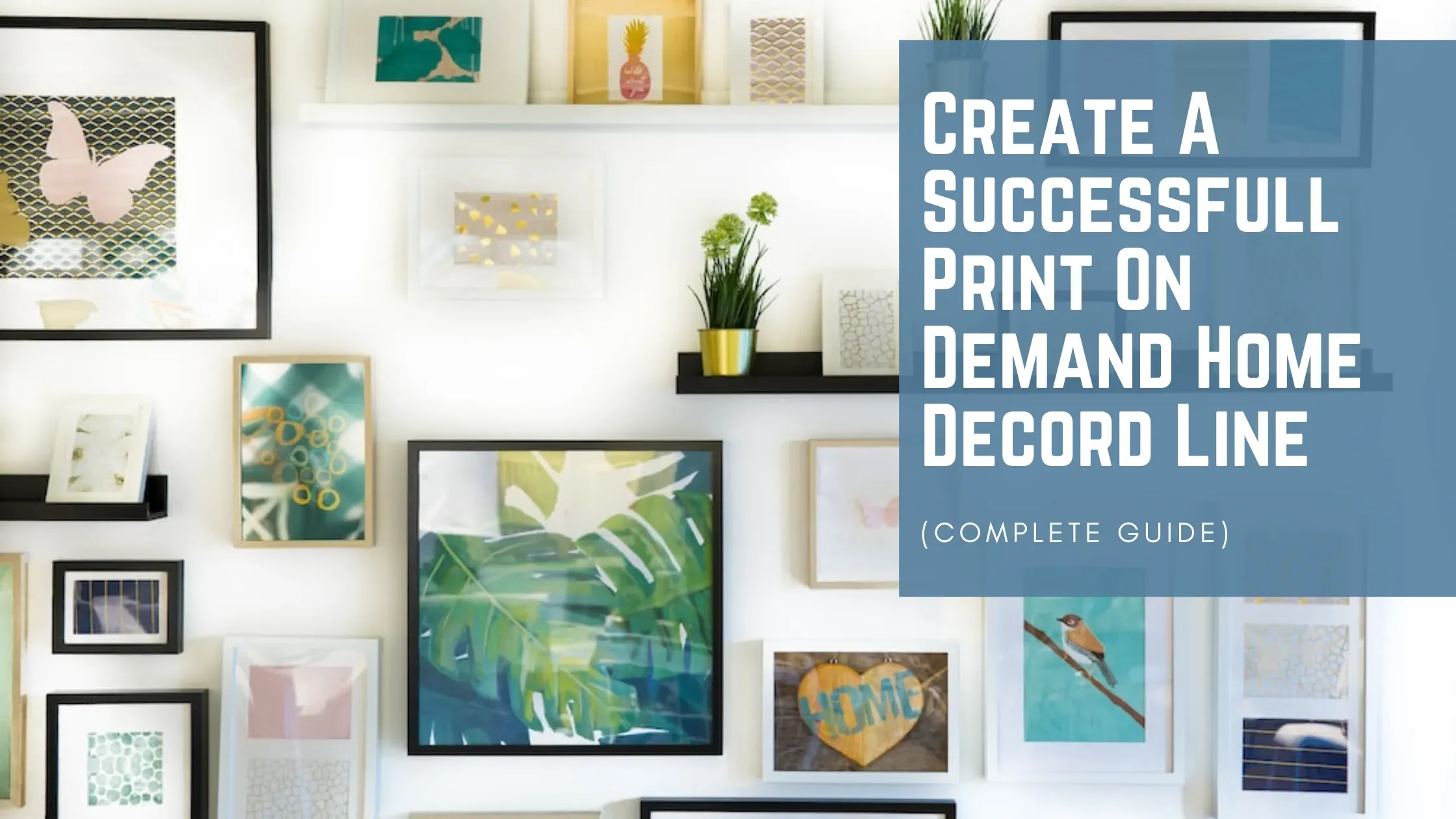
Print on Demand for Home Decor is reshaping how designers, makers, and aspiring entrepreneurs turn creative concepts into cash. In a world where customers crave unique, personalized spaces, the ability to offer custom home decor without carrying inventory is a powerful proposition. This model lets you test ideas and scale your business while reaching customers worldwide with minimal upfront risk, and it aligns with POD home decor ideas. By understanding what POD in the home decor niche looks like in practice, you can build a home decor print on demand business with a practical, repeatable roadmap. If you’re wondering how to start POD in home decor, this guide outlines approachable steps to launch and grow.
In practical terms, this approach is a demand-driven interior styling model where products are produced only after a customer places an order. Think of it as on-demand printing for wall art, textiles, and soft furnishings that scales with your audience without inventory risk. Success hinges on reliable production partners, color accuracy, and a cohesive design language that threads through your catalog. A smart strategy uses lifestyle-focused visuals, trend-driven inspiration, and semantic keywords to connect with shoppers seeking unique, ready-to-hang decor. With a clear plan for product naming, sizing, and marketing, you can move from concept boards to a thriving online presence.
Print on Demand for Home Decor: A Flexible, Low-Risk Startup
Print on Demand for Home Decor is a flexible business model that lets designers and makers move from concept to customer without carrying inventory. By printing only after a sale, you eliminate upfront manufacturing costs and reduce the risk of unsold stock. This model supports the core idea of print on demand home decor, where creativity can drive revenue with minimal overhead while staying aligned with current design trends. For someone wondering how to start POD in home decor, this approach offers a practical, scalable entry point into the market.
With POD, you can quickly test ideas and niches such as art prints, cushions, or tapestries without committing to large runs. The focus on customization at scale means you can offer multiple sizes, finishes, and colorways—appealing to customers seeking unique, personalized spaces. The ability to iterate based on real orders makes it a compelling strategy for pursuing POD home decor ideas and cultivating a catalog of custom home decor prints that reflect your brand voice.
Finding Your Niche: POD Home Decor Ideas That Speak to Rooms and Lifestyles
Niche is king in POD home decor. By defining a design language tied to specific rooms, audiences, or moods, you create a cohesive catalog that makes cross-selling easier. Consider options like thematic art prints for kitchens, living rooms, or kids’ spaces, or pattern-based textiles with a unified color story. This is where POD home decor ideas become more than random graphics—they become a recognizable style that customers want to collect and display.
Align your product mix around a signature aesthetic—wall art in a single format, complemented by textiles that echo the same motifs. Consistency helps branding and searchability. When you know your niche, you can craft product copy and imagery that address real home styling needs, which supports a successful home decor print on demand business.
From Design to Mockups: Creating Descriptive, Sellable Home Decor Prints
The design phase turns ideas into print-ready files. Focus on high resolution (300 DPI or higher), correct aspect ratios, and color workflows to ensure art translates from screen to wall. This is essential for custom home decor prints because clients judge quality by how accurately colors and scales render on their spaces. In the context of a home decor print on demand business, strong designs paired with reliable production yield better margins and happier customers.
Mockups and lifestyle photography are your sales tools. Move beyond flat previews to scenes that show how the art interacts with light, texture, and furnishings. If you’re pursuing POD home decor ideas, invest in mockups that tell a story and demonstrate sizing in real rooms; this helps customers visualize the piece in their own spaces and supports conversions.
Partner Selection and Quality Control: Choosing the Right POD Partners for Home Decor
Choosing the right POD partner is more than catalog size. Look for color accuracy, fabric and material quality, and reliable fulfillment networks. For home decor, you’ll want options that handle wall art, textiles, and tapestries with consistent print quality. When evaluating providers, consider how well they align with your design goals and your budget for samples and proofs—a critical step in establishing trust with customers.
Implement a color-management workflow and request proofs for new designs before opening a collection. Clear communication about lead times, packaging, and returns helps reduce surprises for your customers and keeps your home decor print on demand business running smoothly. This kind of diligence ensures that your brand is known for reliability as well as artistry.
Marketing, SEO, and Scaling a Home Decor Print on Demand Brand
Marketing and SEO are essential to making your POD home decor venture visible. Craft product pages that use the focus keyword alongside related LSI terms like print on demand home decor and POD home decor ideas. Build content around room styling tips, design guides, and trend reports that naturally incorporate phrases such as custom home decor prints and how to start POD in home decor.
Scaling your catalog and expanding to new markets requires data-driven decisions. Consider limited-edition drops, seasonal collections, and collaborations with artists to keep the catalog fresh. By gradually adding decor categories while maintaining a cohesive aesthetic, you can grow a sustainable home decor print on demand business and build brand equity in spaces customers trust and admire.
Frequently Asked Questions
What is print on demand for home decor and how does it work for a new business?
Print on demand for home decor is a fulfillment model where products are produced only after an order is placed. You design items such as wall art, cushions, and throws, and a POD partner prints the design onto the chosen product. This approach reduces inventory risk and lets you validate ideas before expanding into a larger home decor print on demand business.
What are some POD home decor ideas to test quickly and validate demand?
Start with cohesive themes like botanical wall art, geometric cushions, or minimal abstract prints that fit a room mood. Use a small catalog to test across channels and refine colors, sizes, and placements based on feedback, guiding your POD home decor ideas toward formats customers love.
How do I choose the right partner for custom home decor prints?
Evaluate potential providers on product range, color accuracy, print quality, proofs, and fulfillment speed. Order samples of custom home decor prints to verify reproduction on canvas, posters, textiles, and other items before launching your line; a reliable POD partner ensures consistent color across orders.
What pricing strategy works for a home decor print on demand business?
Calculate landed costs (printing, base product, packaging, shipping) and use value-based pricing that reflects the design’s uniqueness. Consider bundles and tiered sizes to increase average order value, helping your home decor print on demand business stay profitable.
What steps are involved to start POD in home decor and scale to a full catalog?
Define your niche and design language, choose reliable POD partners, and create high-resolution designs with scalable mockups. Launch focused collections, gather customer feedback, and gradually expand into additional decor categories or limited-edition drops to grow your POD home decor brand.
| Aspect | Key Points |
|---|---|
| What is POD for Home Decor? | Definition: A fulfillment model where products are produced after order; you design wall art, cushions, tapestries, blankets, or curtains; benefits include zero inventory risk, no demand guessing, rapid iteration, and a broad catalog with low upfront costs. |
| Why POD for Home Decor Works | Key advantages: low startup costs; wide product range with scalable catalog; customization at scale; quick time-to-market; global reach. |
| Identifying Your Niche | Niche defines design language, audience, and use case; examples: thematic room art; pattern-based textiles; minimalist vs maximalist; seasonal or trend-driven pieces; choose a cohesive product mix. |
| Building Your Catalog | Translate designs to products; guidelines: high resolution (≥300 DPI); manage aspect ratios and sizes; color translation; textile considerations (repeats, edge finishing); use lifestyle mockups that sell. |
| Choosing POD Partners | Look for reliable printing and color accuracy; suitable product catalog; strong fulfillment network; sample policies; popular options include Printful, Printify, and Gooten; ensure international shipping capabilities. |
| Pricing and Margins | Calculate landed costs; value-based pricing; bundle offers; tiered pricing by sizes and materials; optimize profitability. |
| Marketing and SEO | SEO-focused product pages; content marketing with guides and tips; leverage visual platforms like Pinterest and Instagram; use social proof and reviews; consider paid channels if budget allows. |
| Operational Best Practices | Automate order routing and proofs; implement color management and quality control; clear naming and categorization; strong customer service and smooth returns process. |
| Scaling Beyond the First Collection | Expand into new decor categories; launch limited edition drops; collaborate with designers; establish international storefronts and localized campaigns. |
| Common Pitfalls | Inconsistent color rendering; long shipping times; copyright and trademark concerns; poor product expectations; mitigate with proofs and accurate mockups. |
| Concept-to-Cash Example | Nature inspired wall art with sizes 12×16, 18×24, 24×36; matching cushions; optimize for print on demand home decor; lifestyle imagery; Pinterest driven traffic; iterate and grow collections. |
Summary
Print on Demand for Home Decor is a practical, scalable path to turning your creative concepts into cash. By defining a clear niche, selecting reliable POD partners, designing with room scale impact in mind, and employing smart marketing and SEO tactics, you can build a durable brand around custom home decor prints and related items. The journey from concept boards to customer homes is shorter than you think when you leverage the POD model effectively. Start by validating your design ideas, building a clean product library, and telling a cohesive design story that invites customers to bring your concepts into their spaces.